
Some provisions of functional reliability of systems
THE REPORT IS BASED ON THE MATERIALS OF THE BOOK BY I. B. SHUBINSKY "FUNCTIONAL RELIABILITY OF INFORMATION SYSTEMS"

Reliability, Scientific and Practical Journal, No. 4 (2013)
Reliability, Scientific and Practical Journal, No. 3 (2014)
Reliability, Scientific and Practical Journal, No. 1 (2015)
Reliability, Scientific and Practical Journal, No. 2 (2015)
Reliability, Scientific and Practical Journal, No. 3 (2015)
Reliability, Scientific and Practical Journal, No. 4 (2015)
Reliability, Scientific and Practical Journal, No. 1 (2016)
Scientific and practical peer-reviewed journal "Reliability" No. 2 (2016)
Reliability, Scientific and Practical Journal, No. 3 (2016)
Reliability, Scientific and Practical Journal, No. 4 (2016)
Reliability, Scientific and Practical Journal, No. 1 (2017)
Reliability, Scientific and Practical Journal, No. 2 (2017)
A peer-reviewed scientific and practical journal.
The journal "Reliability" has been published quarterly since 2001. It is included in the list of leading journals and publications of the Higher Attestation Commission (HAC). Since 2010, the journal has been published with the support of Russian Railways. Since 2012, it has been published in two languages: Russian and English. The journal comprehensively covers issues of managing structural reliability, functional reliability, functional safety of systems, system fault tolerance, certification issues, and standardization in the field of reliability, functional and information security of systems. One of the frequently covered topics in the journal is the results of implementing an integrated technology for managing resources, risks, and reliability at various stages of the life cycle (URRAN) of railway facilities.
Reliability, Scientific and Practical Journal, No. 2 (2013)
Reliability, Scientific and Practical Journal, No. 3 (2013)
Reliability, Scientific and Practical Journal, No. 1 (2014)
Reliability, Scientific and Practical Journal, No. 2 (2014)
Reliability, Scientific and Practical Journal, No. 4 (2014)
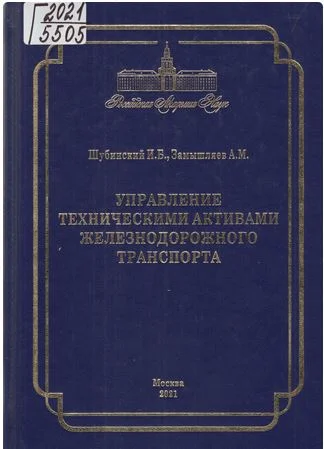
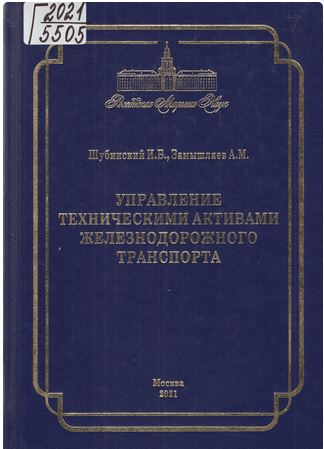
The article discusses the application of the ISO 55000 series of standards [2] in the management of a company's tangible assets. It describes a technical asset management system based on the URRAN methodology [4,5.6] — a methodology for integrated resource and risk management through analysis and provision of the required levels of reliability and safety of railway transport facilities. The role of the Russian Railways holding in the Russian economy and the problems encountered in railway transport in the current pandemic conditions are highlighted. The experience of the International Union of Railways (UIC) in asset management is considered [1]. The article presents the main provisions of integrated management of technical maintenance of railway transport facilities, describes the objects, functions, processes, goals and objectives of the URRAN system [4]. The problem of constructing a digital risk management platform in the field of traffic safety is considered [17, 18]. Some results of research and implementation of the URRAN system for managing technical assets in railway transport are presented.
This book presents the fundamental concepts and indicators of the structural reliability of information systems, demonstrating the commonalities and specific differences between reliability indicators used in domestic and international standards. Recent changes in approaches to reliability modeling are reflected. Markov reliability models and graph semi-Markov reliability calculation methods are described in detail, illustrated with numerous examples. Considerable attention is devoted to engineering methods for calculating and approximately predicting the structural reliability of information systems, estimating calculation errors, and statistically evaluating reliability indicators. Each chapter ends with quizzes covering the most complex and significant material.
This book is primarily intended for professionals involved in the practical development, production, operation, and modification of information systems. It is intended for researchers specializing in the structural reliability of various discrete systems, as well as faculty, graduate students, and undergraduates specializing in information systems and automated control systems.
The book "Reliable Fault-Tolerant Information Systems. Synthesis Methods" offered to the reader is the third and final part of the "Reliability of Information Systems" project.
The book presents the basic concepts and indicators of the structural reliability of information systems, showing the commonalities and specific differences in reliability indicators used in domestic and international standards.
This book presents for the first time the theory of functional reliability of information systems as an integral part of the general theory of reliability.
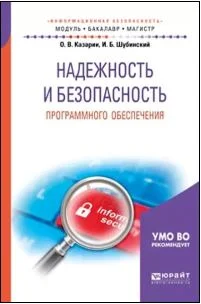
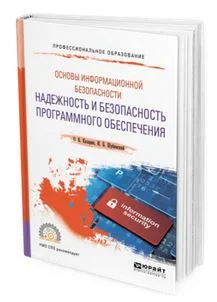
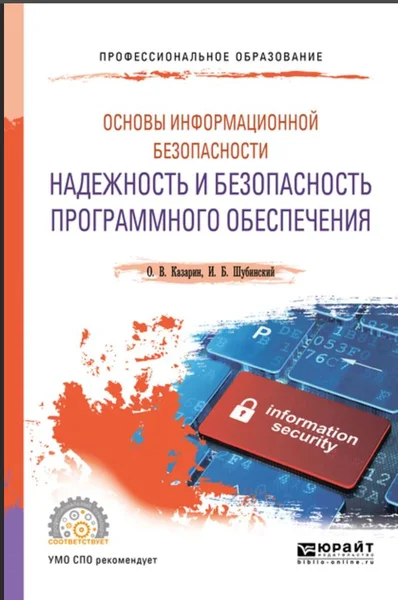
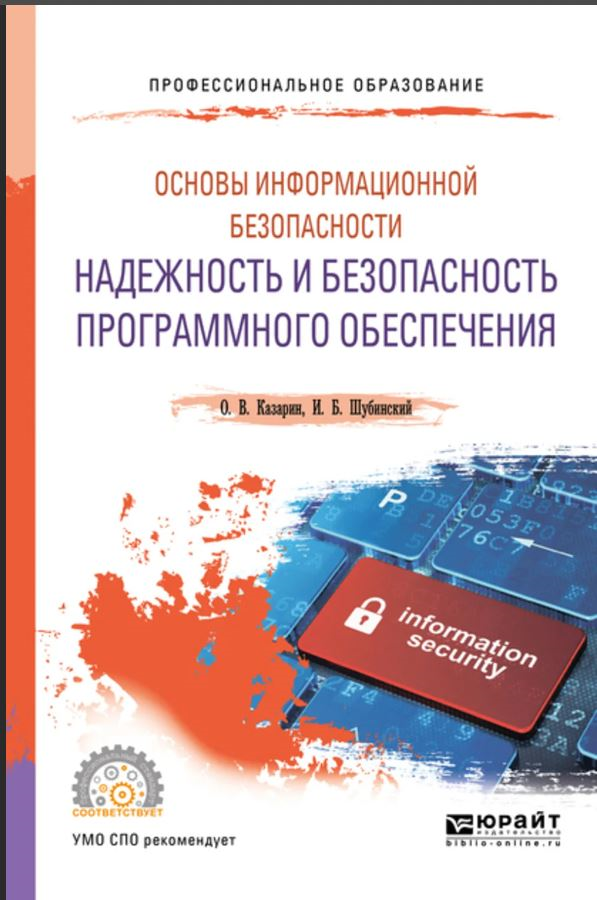
This textbook presents the theoretical and practical foundations for creating reliable and secure software for information systems. It describes the rules, stages, and technologies for building reliable software. It examines requirements for the functional reliability and software architecture of critical systems, methods for protecting software from malware, methods for ensuring software security implemented during the testing phases of software systems, and methods and tools for testing and protecting software from research by unscrupulous competitors and attackers. It presents regulatory documents governing activities in this area, as well as procedures for confirming the compliance of software reliability and security of modern information systems with the requirements of Russian regulators. Each chapter ends with test questions and assignments, as well as recommended literature. The appendix includes a brief glossary of terms, as well as some information necessary for mastering the subject area under study.
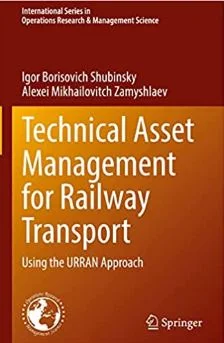
This book introduces readers to the key provisions of the URRAN-based technical asset management system - a methodology for managing resources and risks by analyzing and ensuring the required levels of reliability and safety in Russia’s railway transport facilities. It describes the architecture of the URRAN information system’s unified corporate platform (UCP URRAN) and its subsystems for infrastructure facilities and rolling stock complexes. It also highlights the UCP URRAN’s prospects for development, especially in the application of artificial intelligence to predict dangerous events in railway transport operation. The book is chiefly intended for specialists engaged in practical work on the technical maintenance of railway transport facilities. It can also be used as a reference guide for students and researchers at railway universities or professionals who are dealing with problems in technical asset management in other industries.
Экспертиза и сертификационные испытания программных средств на соответствие требованиям функциональной безопасности и качества
Экспертиза качества и надежности программного обеспечения на федеральном железнодорожном транспорте
A short study on rebooting safe computers and the impact on safety
Functional safety of railway automation systems: methods and models
Functional reliability of information control systems for federal railway transport
Timing analysis of a fault-tolerant technique subject to hardware failures
Technology and tools for testing the functional safety of software
This article describes the nature of faulty errors, their occurrence, and their impact on system performance. Methods for detecting faulty errors are discussed. Fault protection methods are described, and a comprehensive approach to ensuring system resilience to faults is proposed.
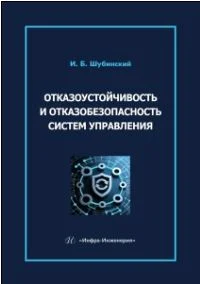
Definitions of dangerous failure and fail-safety are provided, the relationship and fundamental differences between functional reliability and functional safety are discussed, and alternatives for ensuring the fail-safety of control systems are analyzed.
The main cybersecurity threats and methods for implementing cyberattacks are considered, and a concept for ensuring a guaranteed level of control system cybersecurity is proposed.
This article examines the fundamental aspects of building reliable software. It discusses methods and techniques for preventing errors based on defensive and multi-version programming, passive and active error detection tools, and principles and methods for correcting errors based on dynamic redundancy and restart.
Relationship between CENELEC standards in the field of railway signalling and other safety standards
Reliability and safety of railway automation and telemechanics
Experience in creating quality systems in software development organizations
Technology for a Comprehensive Assessment of Rail Transport Software
Software Quality Characteristics and Methods for Assessing Them
Functional Security of Information Technology in Critical Systems
Mathematical and information support for the URRAN system
Adaptive management system for technical maintenance of railway transport infrastructure (URRAN project)